
Separated from Primates
Some people read warning labels. Others see them as suggestions.

I’m three weeks post-op from bilateral knee replacement, sitting with an ice machine pumping cold water through my knee wraps and a cheap TENS unit strapped underneath to help manage the pain. TENS units use electrical pulses to distract your brain from pain signals in injured areas.
Sitting here with electrodes on my legs reminded me of an earlier experiment.
The Lifepak Incident - Early 2000s
The department was replacing our Lifepak 12 cardiac monitors with new Zoll units. Standard practice when introducing new equipment: overlap period to let crews get familiar before the old gear disappears.
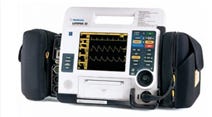
Figure 1 LifePak 12
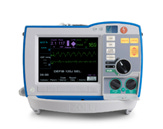
Figure 2 Zoll
Our crew had the new Zolls dialed in. The old Lifepak 12 sat upstairs in the dayroom, waiting to be collected.
We were sitting around shooting the breeze when someone - I don’t recall if it was Jim or me - brought up an idea: Could you use the Lifepak’s pacing function as a TENS unit?
Only one way to find out.
We put the pads on our arms and started cranking up the amperage to see how much we could take. The muscle contractions were intense but manageable.
“You could probably go higher on your leg,” one of the guys said. “Bigger muscle mass.”
Challenge accepted.
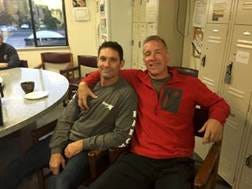
We put the pads on my thigh. Jim started dialing up the amperage. By the time he got up there, it was genuinely painful - I was gritting my teeth, trying not to tap out in front of the crew.
That’s when our Medical Services Officer, Dan, walked into the dayroom.
He looked at me with electrodes on my leg, Jim with his hand on the dial, and all the guys sitting in recliners watching like this was pay-per-view.
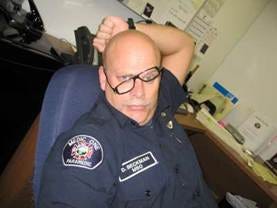
Dan didn’t say a word.
He turned around, walked back down the stairs, and left the station.
We had a good laugh, then got down to the important business of determining who could take the most amperage.
The experiment was interrupted by a call.
The S-ICD Test - A Decade Later
Fast forward ten years. I’d been injured at an apartment fire and ended up with an S-ICD - a subcutaneous implantable cardioverter-defibrillator. After months of recovery and stubbornness, I’d convinced the doctors to let me return to work with conditions.
I was given a list of things to avoid because of the S-ICD. All electrical: arc welders, MRI machines, TENS units, industrial magnets, certain power tools.
Most people would see this as a “do not do” list.
I saw it as “let’s see what happens.”
I systematically checked off most of the list. Then at FDIC in Indianapolis, we received instructor gift bags that included cheap TENS units.
The guys told me I should get rid of mine since I couldn’t use it with my S-ICD.
I’m not an electrician, but I’ve done enough electrical work to understand how electricity works. As long as you don’t put the leads across your heart, the electricity from a TENS unit will never affect your heart. Electricity travels the path of least resistance, lead to lead.
I had an appointment coming up with my electrophysiologist, Dr. Salam. I was going to bring him proof of my logic.
Marc was working at Station 63 that day. I called him.
“I’m coming by. I need you to hook me up to the monitor.”
Marc hooked me up to the cardiac monitor. We started with the TENS unit on my right calf, cranked the intensity to maximum, and ran a continuous printout. As expected: no change from baseline.
We did my right arm. No change.
Then we did my right pectoral - the closest to my S-ICD. This was the only placement that registered anything on the 12-lead, and it was just interference from the muscle contracting. Not actual cardiac activity.
We printed off the entire test and the 12-lead report.
At my next appointment, I handed Dr. Salam the printout and explained the systematic testing we’d done.
He looked at the data. Then he looked at me.

“This,” he said, “confirms that you are only separated from primates by the fact that you can walk fully upright.”
“I don’t want to know about it,” he said, handing the printout back.
Dr. Salam didn’t approve the use of TENS units. He just acknowledged that the data showed what I’d claimed it would show, and that we never had this conversation.
I systematically checked off everything on that “do not do” list. Nothing on it interfered with the S-ICD. But Dr. Salam maintained plausible deniability throughout.
Dan, our MSO who’d walked in on the original Lifepak experiment? He never brought it up. He knew better than to engage with knuckleheads.
That was an enjoyable read and kept me interested all the way through. Wishing you a good and speedy recovery with the knee.
Impeccable pacing as always. Love the end. And the photos you come up with are always perfect.